Introduction:
The sustainable development of aquaculture depends on early detection and precise control of potential pathogens. Nocardia seriolae, a significant fish pathogen, can cause substantial economic losses when infections occur. In the complex field of pathogen detection, the ability to quickly and accurately identify and quantify Nocardia presence has become crucial for maintaining aquatic health and food safety. This article examines an advanced nucleic acid detection kit for Nocardia, detailing its working principles, applications, and importance in research and industry.
Core Technology: Real-time Fluorescence Quantitative PCR Methodology
The Nocardia nucleic acid detection kit (Real-time PCR-Fluorescent Probe Method) employs cutting-edge detection technology. Real-time fluorescence quantitative PCR (qPCR) monitors product quantity through fluorescent signals during the DNA polymerase chain reaction (PCR) process. This technology precisely detects and quantifies target nucleic acids (DNA or RNA) with high sensitivity, specificity, operational simplicity, and rapid results.
Detailed Working Principle
The kit utilizes PCR's exponential amplification characteristics and real-time fluorescence feedback mechanisms. Its key innovation lies in primers and fluorescent probes designed specifically for Nocardia seriolae gene fragments:
- Specific Binding: Primers bind to DNA template ends to initiate chain reactions, while fluorescent probes (containing fluorophores and quenchers) attach to middle sections of amplification regions.
- Fluorescence Generation: During PCR, Taq polymerase's 5'→3' exonuclease activity cleaves probes, separating fluorophores from quenchers to emit detectable fluorescence.
- Real-time Monitoring: Fluorescence PCR instruments track signal intensity changes, with lower cycle threshold (Ct) values indicating higher initial template quantities.
The closed-system design prevents contamination and cross-reactions, ensuring reliable detection and quantification of Nocardia genetic material.
Key Components and Quality Control
The complete kit includes:
- PCR Reaction Mix: Pre-mixed with dNTPs, PCR buffer, Mg2+ ions, Taq polymerase, primers, and probes (typically 24 tubes/kit).
- Positive Control: Contains known-concentration Nocardia DNA to validate amplification efficiency.
- Negative Control: Target-free reagents to detect nonspecific amplification or contamination.
Important Note: Components from different kit batches should never be mixed due to potential formulation variations.
Sample Requirements and Operational Standards
Reliable results depend on proper sample collection and handling:
- Sample Types: Fish pathological tissues (gills, spleen, kidneys) where Nocardia typically proliferates.
- Collection & Transport: Follow industry standards (e.g., SC/T 7103) with refrigerated transport (2°C–8°C) to prevent degradation.
- Storage: Short-term (24 hours at 2°C–8°C); long-term (-20°C or below).
Applications and Value
The kit serves multiple purposes:
- Diagnosing and monitoring Nocardia infections in fish populations.
- Conducting epidemiological analyses to track transmission patterns.
- Ensuring aquaculture product quality and consumer safety.
- Supporting research on pathogenicity, strain identification, and antibiotic resistance.
- Providing educational tools for molecular diagnostics training.
Product Specifications
- Model: BIK-Q-W028
- Brand: Biokey
- Applications: Education, industrial engineering, healthcare, scientific research.
- Origin: China
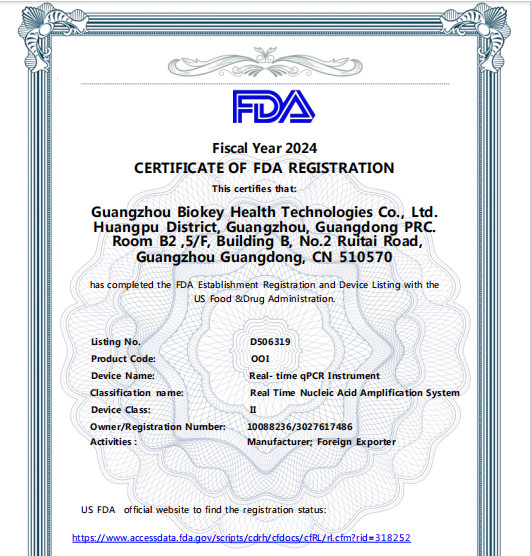
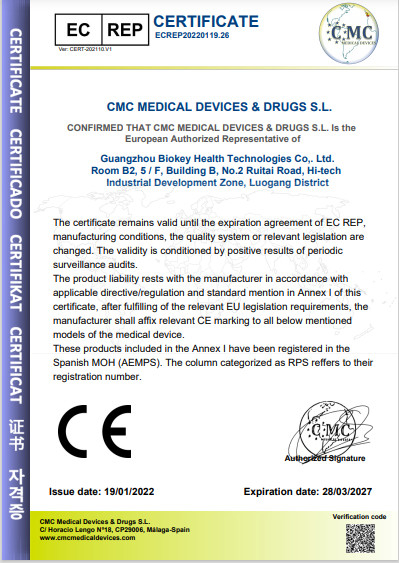
- Standards: ISO-certified
Conclusion:
The Nocardia nucleic acid detection kit represents an indispensable tool for aquaculture disease management and food safety. Its rapid, precise detection capabilities support epidemiological studies, quality control, and scientific research, ultimately contributing to aquatic and human health protection.


 Το μήνυμά σας πρέπει να αποτελείται από 20-3.000 χαρακτήρες!
 Greek
Greek